What bed size works best in a studio apartment?
The best bed size is not the biggest mattress that physically fits. It is the biggest sleep setup that still leaves the studio working during the other sixteen hours of the day.
A full or queen is the most flexible choice for many studios. A king can work in wider or larger studios, but it should be treated as the room's main priority. Always include the bed frame and approach space in the footprint.

Test the advice against your actual space
A mattress size is a sleep choice and a space-planning choice. The important comparison is not only bed area but what larger sizes displace from the rest of the studio.
- Exact frame dimensions beyond the nominal mattress
- The side or sides that need everyday access
- Under-bed drawer or storage movement
- The route between bed, bathroom, wardrobe and entrance
Example only: moving from a queen to a king adds substantial width before the frame and bedside access are counted. Mark both options on the floor and compare what happens to the sofa, desk or wardrobe route rather than asking only whether the larger rectangle fits.
Choose the largest sleep setup that leaves your highest-priority daytime functions usable.
Do not center a bed for symmetry if that creates worse access or wastes the only useful storage wall.
Use mattress dimensions as the starting point
Common US mattress dimensions are approximately 38 × 75 inches for a twin, 54 × 75 for a full, 60 × 80 for a queen and 76 × 80 for a king. Frames can add several inches beyond those dimensions.
Treat those numbers as a planning baseline and check the exact product before purchase.
Decide how many sides need access
A solo sleeper may accept one side against a wall to free floor area. Two people usually benefit from access on both sides, even if the clearances are modest.
The access decision can matter more than the difference between mattress sizes.
Count the storage opportunity
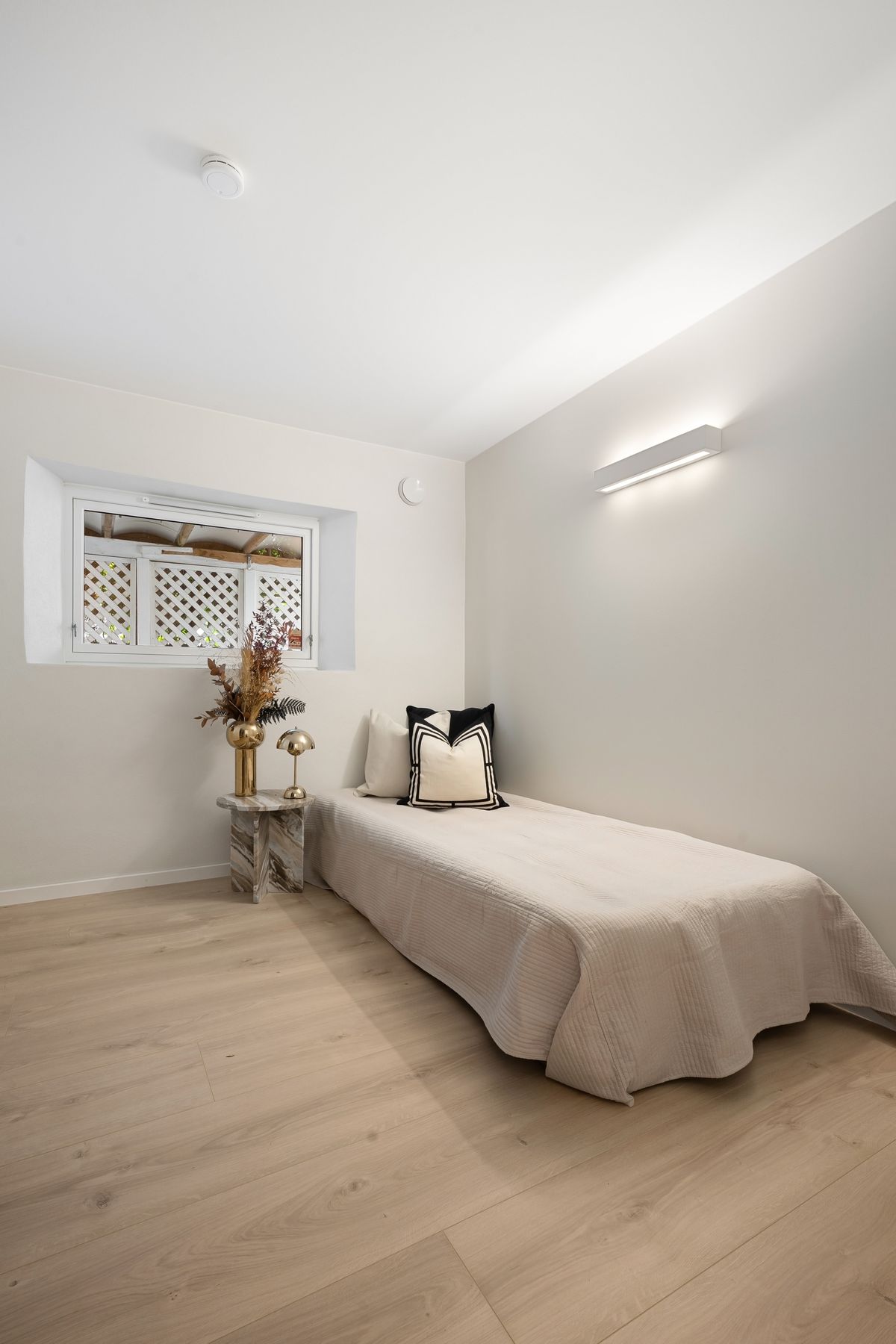
A taller bed with drawers or open under-bed space can replace a separate dresser. A low platform may look calmer but provide less hidden capacity.
Storage beds are valuable only if the drawers can actually open without hitting another piece.
Compare what the larger bed displaces
Moving from queen to king is not only about an extra sixteen inches of width. Ask what has to shrink: sofa, desk, dining, wardrobe access or circulation.
If three other functions become compromised, the larger bed is probably not a neutral upgrade.

Plan the visual weight
A large bed can still look light with a simple frame, wall-mounted bedside shelves and restrained bedding. Bulky headboards, footboards and two large nightstands amplify the footprint.
Before you finish
- Exact mattress and frame size
- One-side or two-side access
- Under-bed storage
- Bedside surface needs
- Path to bathroom
- What must shrink if the bed grows
Small Space Planner combines measured furniture footprints, circulation-first planning and practical renter constraints. Numerical product dimensions should always be checked against the exact manufacturer model, your lease and your building conditions.
Read our editorial and research policy →Turn the advice into a measured starting plan.
Enter your dimensions, bed choice and priorities in the free studio planner.