Adjustable Wall-Rail Storage for Small Apartments: A Fit-First Guide
A new wave of reconfigurable rail-and-bracket storage promises to make one wall work harder. Habo's Hiro system, announced on 8 October 2026 for Nordic markets, is one current example: rails support interchangeable shelves, baskets and perforated panels. But a flexible product is not automatically a good fit for a narrow studio, and a system that needs structural fixing is not automatically renter-friendly. This guide uses the launch as a reason to make a better storage plan—not as a hands-on product review or a shopping endorsement.
Choose the shallowest shelf that safely holds your actual items, draw its projection into the walking route, and verify the exact rail, bracket, fastener and wall combination before buying. Group everyday objects between waist and eye level, reserve higher positions for light infrequent items, and compare the cost of future reconfiguration with simpler freestanding or fixed shelving. If you cannot obtain permission or safe fixing information, do not install a loaded wall-rail system.
- What changed in October 2026—and what did not
- Audit the items before you measure the wall
- Calculate the shelf projection into your route
- Choose shelf height by how often you reach
- Wall-mounted rails versus freestanding alternatives
- Do not guess about anchors, compatibility or load ratings
- Build one adaptable storage wall on paper
- Use a five-part decision scorecard
- Run a 20-minute real-life test before ordering
What changed in October 2026—and what did not
On 8 October 2026, Swedish hardware company Habo announced Hiro, a modular system built around rails, brackets, shelves, baskets and a perforated storage panel that can also function as a shelf. The company says some components are compatible with other commonly used systems, and that Hiro is launching in Sweden in autumn 2026. Those are manufacturer statements, not evidence that every third-party bracket or shelf will fit.
The practical trend is adaptability: a wall that holds shoes in an entry today might hold folded clothing or cleaning supplies after a move. That is useful for compact homes because needs change faster than floor area. However, wall capacity, rental rules, shelf depth and daily access still decide whether a system is worth installing.
This is a general planning guide, not an assessment of Hiro's load rating, installation quality, pricing or availability outside its announced markets. Product photographs from Habo have not been reused because a press image is not automatically licensed for republication.
Audit the items before you measure the wall
Empty the area you want to organize and sort items into daily, weekly and occasional use. Put them in actual groups: keys and dog leads; folded sweaters; laundry supplies; office accessories; or pantry backups. A rail system only helps when the contents have a sensible retrieval order.
Measure the largest item in each group, including handles, lids and the space your hand needs to lift it. A basket may be 26 cm deep but require extra room to pull forward. The dimensions printed for a shelf do not tell you whether a tall bottle can be removed from the shelf above.
Estimate weight using real packaging or a scale. Books, glass jars and detergent are far heavier than decorative baskets. Do not translate an estimated object weight into a safe installation rating; the finished system is limited by its weakest specified component and the suitability of the wall fixings.
Prioritize daily items that can be reached without moving another object. Put weekly items within safe reach and store occasional items high or low only when appropriate for their weight and users. If you cannot estimate an item's weight, measure it before choosing a shelf.
Calculate the shelf projection into your route
Measure from the finished wall face to the nearest opposite obstruction at the shelf's height. Include the rail, bracket, shelf lip, basket handle and any object that projects beyond the shelf. A shelf that looks shallow when empty can become deeper once a coat, plant or container is in place.
For an illustrative 150 cm-wide passage between a wall and an opposite boundary, a 20 cm-deep shelf leaves 130 cm of geometric width; a 35 cm-deep shelf leaves 115 cm. The difference is 15 cm, which may matter when carrying laundry or passing another person. Neither figure is a recommended minimum or a legal accessibility clearance.
If the corridor also has a door swing, radiator, switch or projecting furniture, subtract those obstructions separately and test the real path. Tape both proposed depths on the floor and carry the largest basket through the route. If you need to twist sideways, the storage is in the wrong place or too deep.
Laundry and utility storage must leave appliance, service and maintenance access intact. Independent real interior, not a product demonstration. Photo: Alex Tyson / Pexels. Original photo (https://www.pexels.com/photo/a-laundry-room-19980200/).
Choose shelf height by how often you reach
Think of the wall as three zones rather than one giant grid. Put daily-use items in the easiest reach band for the people who live there. Reserve the highest shelves for light items that are rarely needed, and use the lowest zone for heavy objects only when retrieval is safe.
A simple starting plan for a narrow entry is one shallow tray for keys and post, hooks for frequently used bags and a separate shoe area that does not spill into the route. In a bedroom, a small stack of folded clothes may work better than several tiny baskets that hide their contents. In a laundry area, keep supplies where the machine door and utility connections remain accessible.
Do not position dangerous cleaning products where children can reach them. Do not use a high shelf to store anything that could cause injury if it falls. If a household member has limited reach or balance, plan to their safe accessible range instead of a generic ergonomic diagram.
Wall-mounted rails versus freestanding alternatives
Rail-mounted shelves can preserve floor area and allow height changes without remounting every shelf. They require appropriate structural fixing, however, and often leave a pattern of holes that may be unsuitable for a rental. A rail system is not a no-drill solution just because shelves are adjustable.
Freestanding modular units avoid loading the wall in the same way, but they use floor space and may require anti-tip anchoring. The US Consumer Product Safety Commission recommends securing bookcases and similar furniture to reduce tip-over risk, especially around children. A freestanding unit is not automatically safe or permission-free.
Fixed wall shelves can be the better choice when the contents and height are unlikely to change. Over-door organizers may suit very light, appropriate objects but can interfere with door closure, hinges or escape routes. Compare each option by installed depth, safe support, access and ability to take it to a future home.
Do not guess about anchors, compatibility or load ratings
Before buying, identify the wall: masonry, timber stud, metal stud, plasterboard, tile over substrate or something else. Ask the manufacturer or a qualified installer which anchors and support points are permitted for the specific rail and intended load. Hidden cables, pipes and waterproofing layers are reasons to stop and investigate—not to drill hopefully.
Habo's Hiro 2000 mm wall rail is described by the manufacturer as steel and can be fixed directly to a wall or to a separately sold carrying rail. The product page lists rail dimensions, but it does not give a universal installed capacity for every wall and basket combination. Do not turn a component length or a marketing compatibility claim into a safe load limit.
Another manufacturer, IKEA, explicitly warns on its wall-shelf product pages that suitable screws and plugs depend on the home and that uncertain installations need professional advice. Treat that principle as universal: use the exact assembly instructions and rating for the full assembly. Never mix brands simply because their rails look similar; verify the precise model, slot fit, locking method and published compatibility.
Open shelving can look light but still create visual clutter; allocate the shelf to a clear function first. This is not a Hiro installation. Photo: Esra Afşar / Pexels. Original photo (https://www.pexels.com/photo/shelves-on-a-wall-14416400/).
Build one adaptable storage wall on paper
Draw a simple front elevation with wall width, available height, outlets, switches and any nearby door or window. Sketch two rails and three possible storage levels, but do not assign actual fastener spacing until you have the selected manufacturer's instructions. This is a planning diagram, not a mounting template.
Give each level one job. Example: top for a lightweight spare blanket, middle for everyday folded clothes and lower for a removable basket of accessories. If a basket needs 12 cm of lifting room, draw that space above it. Keep at least one shelf position available for future change rather than filling every slot immediately.
Now draw the same arrangement as a freestanding unit. Compare total installed depth, usable storage, cleaning access, repairability and whether a future move would require patching the wall. If the freestanding option solves the same problem more simply, modular rails may not be worth the installation.
Use a five-part decision scorecard
After eliminating unsafe or unauthorized options, score each candidate from 0 (poor) to 2 (strong) for usable capacity, daily access, floor-space preservation, ability to adapt and total cost. This ten-point score is an editorial decision aid, not a scientific ranking or an assessment of specific brands.
Example: a hypothetical shallow rail system scores 2 for capacity, 2 for access, 2 for floor preservation, 2 for adaptability and 0 for cost: 8/10. A freestanding cabinet scores 2, 2, 0, 1 and 2: 7/10. If the wall cannot safely accept rails or your lease prohibits drilling, the rail option fails before scoring, regardless of its eight points.
Include installation labor, wall repair on move-out, replacement baskets, shipping and any required anchoring in the budget. A system that starts cheap but locks you into expensive accessories may not be the most flexible long-term choice.
Run a 20-minute real-life test before ordering
For five minutes, photograph and measure the wall. For five more, outline the deepest shelf and basket on the floor or with removable paper. Spend the next five minutes walking the normal route while carrying laundry, shopping or a work bag. Finally, simulate retrieving the largest item from each planned level.
If the plan works, check permission, wall type, installation documents and return policy before paying. Do not install first and ask the landlord later. For a bathroom or laundry area, confirm that the chosen materials, fasteners and location are appropriate for moisture and that appliance service access is not obstructed.
The useful outcome is not a photogenic wall filled with baskets. It is a small apartment where the things you use are easier to find, where shelves do not block movement, and where you can change the arrangement without replacing everything. • Sort items by frequency; measure their dimensions and weight. • Measure the finished wall, route, shelf and basket projection. • Tape the footprint and check doors, windows, outlets and service access. • Verify the manufacturer’s full-system rating and suitable wall fixings. • Check lease or owner permission before drilling. • Compare a freestanding alternative and the full installed cost. • Sketch one future configuration and preserve required access.
Use the small-apartment storage audit (/learn/small-apartment-storage-audit), renter-friendly storage guide (/learn/renter-friendly-storage-without-drilling), entryway storage system (/learn/small-entryway-storage-system), furniture measuring checklist (/learn/furniture-measuring-checklist), and studio divider guide (/learn/studio-room-divider-ideas-that-do-not-block-light) to plan the room before buying. • Habo: Hiro modular storage launch, 8 October 2026 (https://habo.com/se/nyheter-och-press/hiro) • Habo: Hiro wall rail 2000 mm specifications (https://habo.com/se/sortiment/forvaring/hang-och-vaggskena-hiro-31465) • US CPSC: anchor heavy furniture and store heavy items low (https://www.cpsc.gov/Newsroom/News-Releases/2026/CPSC-Urges-Fans-Anchor-TVs-and-Furniture-Before-Super-Bowl-LX) • IKEA: wall shelf fixing and load warnings (https://www.ikea.com/es/en/p/bergshult-forlaggare-wall-shelf-white-white-s49562720/)
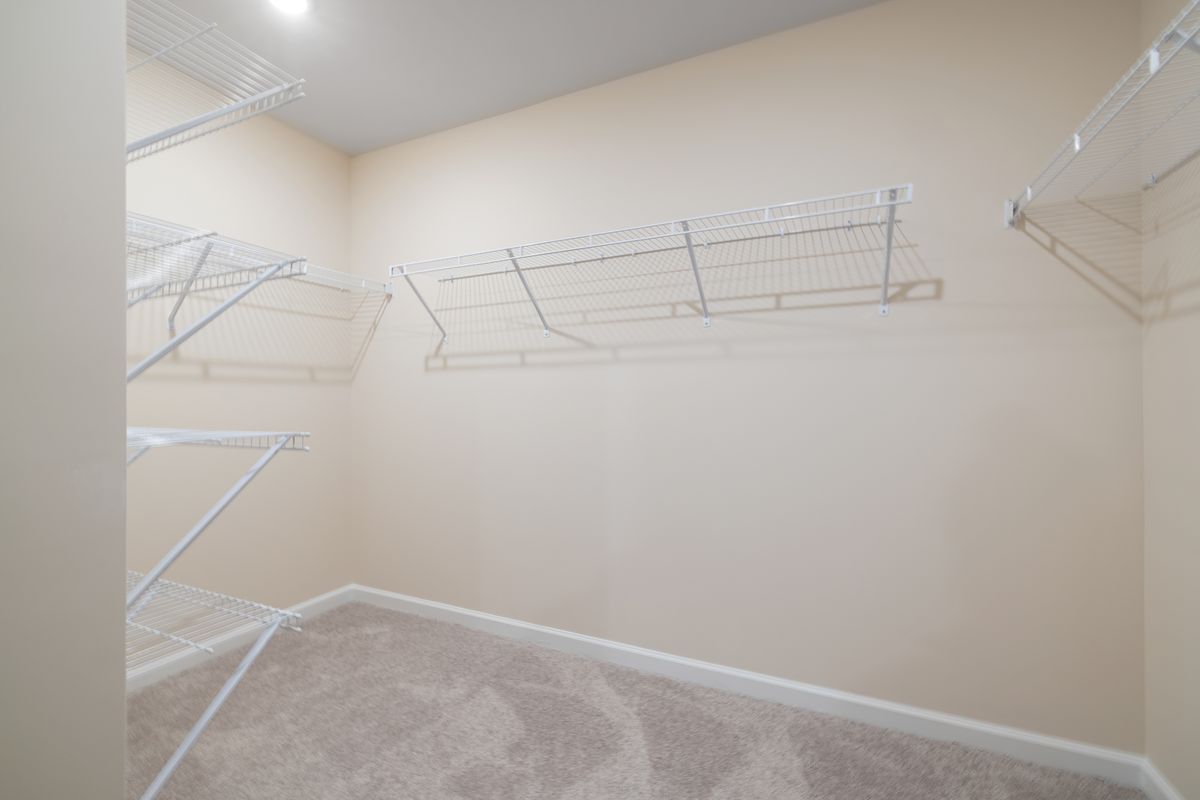
Editorial and photo rights note: The photographs are independent real interiors and must not be presented as photographs of Habo Hiro. All three were checked on Pexels as Free under the Pexels License (https://www.pexels.com/license/). Editorial commercial use and resizing are allowed; no stock redistribution, false endorsements or use as a trademark. Attribution is not mandatory but is provided in captions. This document is a Library backup draft; the complete TypeScript implementation prepared in the unreferenced Git object remains the intended canonical code version, subject to authorized publication.
- Sort items by frequency; measure their dimensions and weight.
- Measure the finished wall, route, shelf and basket projection.
- Tape the footprint and check doors, windows, outlets and service access.
- Verify the manufacturer’s full-system rating and suitable wall fixings.
- Check lease or owner permission before drilling.
- Compare a freestanding alternative and the full installed cost.
- Sketch one future configuration and preserve required access.
- Habo: Hiro modular storage launch, 8 October 2026 (https://habo.com/se/nyheter-och-press/hiro)
- Habo: Hiro wall rail 2000 mm specifications (https://habo.com/se/sortiment/forvaring/hang-och-vaggskena-hiro-31465)
- US CPSC: anchor heavy furniture and store heavy items low (https://www.cpsc.gov/Newsroom/News-Releases/2026/CPSC-Urges-Fans-Anchor-TVs-and-Furniture-Before-Super-Bowl-LX)
- IKEA: wall shelf fixing and load warnings (https://www.ikea.com/es/en/p/bergshult-forlaggare-wall-shelf-white-white-s49562720/)
Small Space Planner combines measured furniture footprints, circulation-first planning and practical renter constraints. Numerical product dimensions should always be checked against the exact manufacturer model, your lease and your building conditions.
Read our editorial and research policy →Turn the advice into a measured starting plan.
Enter your dimensions, bed choice and priorities in the free studio planner.