How to make a small apartment feel bigger without buying more stuff
A room often feels small because the eye encounters too many interruptions: isolated cabinets, blocked windows, furniture in the main route and visible clutter at several heights. The fastest improvements are usually subtractive.
Open the main sightline, concentrate storage, show more continuous floor, keep tall furniture away from the primary window and remove pieces that duplicate the same function.

Test the advice against your actual space
Feeling larger is usually the result of fewer visual interruptions, clearer routes and better sightlines—not a particular color, mirror or decorating trick.
- The longest sightline from the entrance or main seating position
- Which tall pieces interrupt the main window or view across the room
- How many separate storage pieces create repeated visual edges
- Which furniture pieces duplicate the same function
Example only: replacing two narrow cabinets on opposite walls with one taller storage run can reduce the number of furniture edges in view while keeping similar capacity. The gain is visual continuity, not magically increased floor area.
Remove or consolidate an interruption before buying an object advertised as space-enhancing.
Do not sacrifice useful seating, storage or privacy merely to make the room photograph as emptier.
Protect the longest sightline
Stand at the entrance and look toward the farthest wall or window. If a tall object cuts that view immediately, moving it can change the perception of the whole room.
Concentrate visual weight
Several small cabinets scattered around the room create more edges than one larger storage wall. Group storage when possible and leave at least one wall quieter.
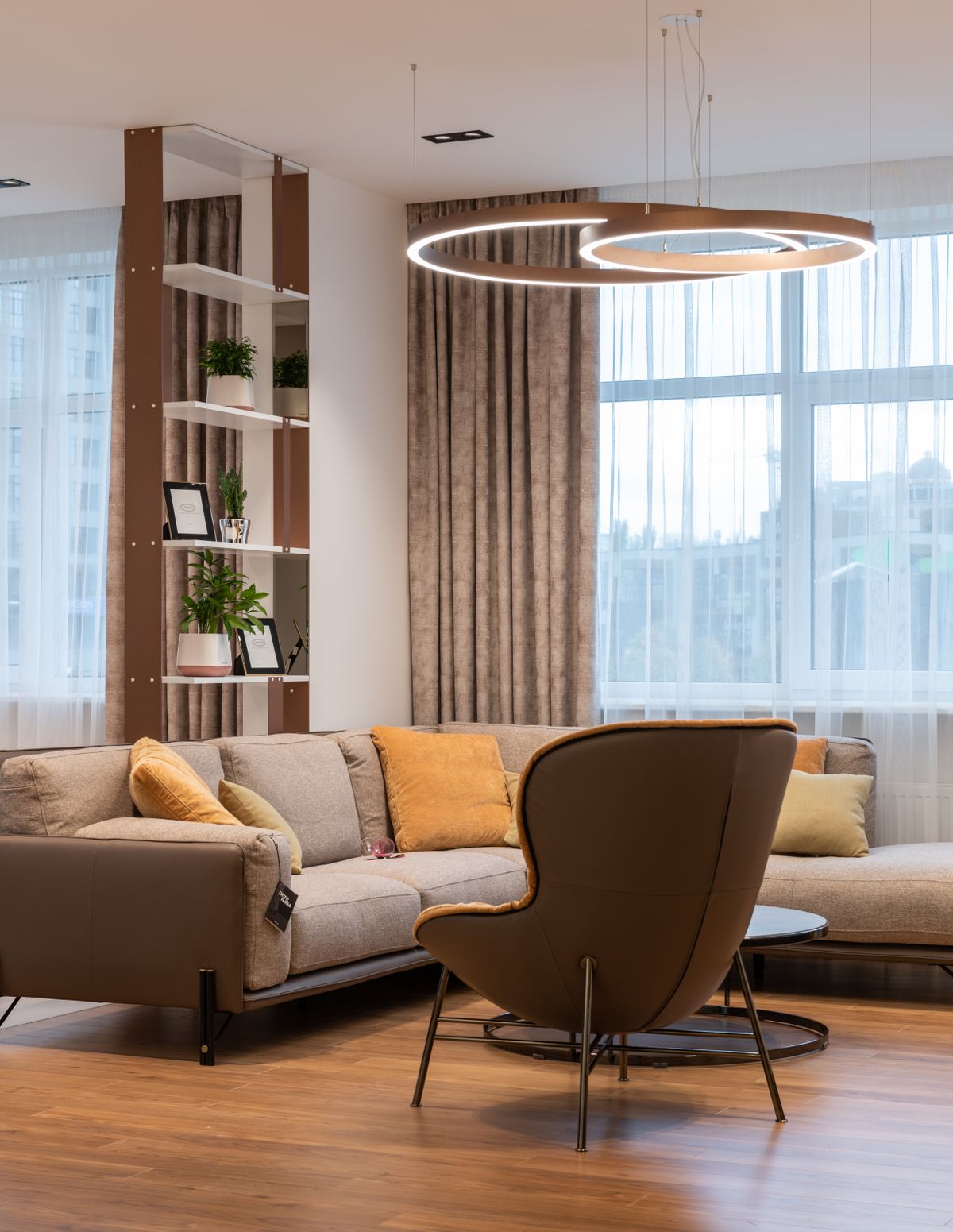
Keep more floor visible
Furniture with visible legs can make the floor plane read more continuously. That does not mean every item should be raised; it means avoiding a solid wall of bulky bases around the room.
Remove duplicate functions
Two side tables, a desk and a dining table may all be serving the same need for a small surface. Consolidating one function can create more breathing room than any decorative trick.

Do not confuse 'bigger' with empty
The goal is a room that supports daily life with fewer obstacles. A perfectly empty apartment is not automatically better if you have nowhere comfortable to sit, work or store essentials.
Small Space Planner combines measured furniture footprints, circulation-first planning and practical renter constraints. Numerical product dimensions should always be checked against the exact manufacturer model, your lease and your building conditions.
Read our editorial and research policy →Turn the advice into a measured starting plan.
Enter your dimensions, bed choice and priorities in the free studio planner.