How to organize a very small bathroom without overfilling it
The smallest bathrooms become chaotic when every backup product is stored where the daily products belong. The solution is to reserve the easiest access for the few things used constantly.
Keep daily products in the prime access zone, move backups higher or outside the bathroom, keep the floor as clear as possible and avoid storing moisture-sensitive items where humidity is persistent.
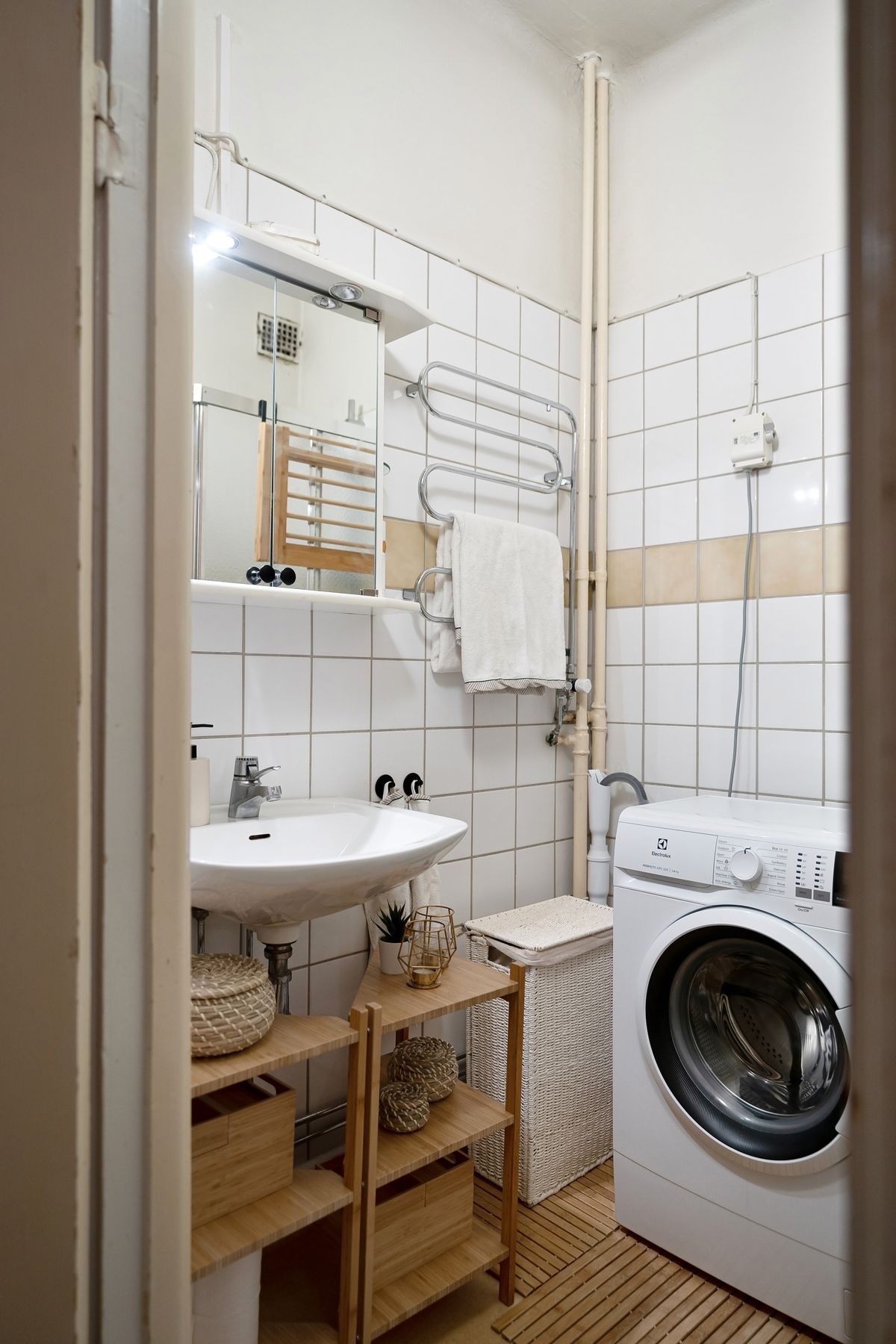
Test the advice against your actual space
The useful question is not how many organizers fit in the bathroom. It is which items deserve the easiest access and which categories can move somewhere drier or less crowded.
- The clear width beside the sink and toilet, including door and drawer movement
- The usable depth of any under-sink space after pipes and traps
- The height available above the toilet or door without creating a head-level obstacle
- How much of the counter is actually needed for daily use
Example only: if a 24-inch-wide vanity has a 6-inch plumbing zone through the middle, do not treat the cabinet as one 24-inch storage box. Divide the remaining space into accessible side zones and reserve the easiest shelf for items used every day. Backups can live higher or outside the bathroom.
Give prime bathroom space to daily-use items; move bulk backups before buying another cabinet.
Do not solve humidity, leaks or ventilation problems by hiding them behind storage.
Create a daily-use zone
Toothbrushes, hand soap and the skincare you use every day should be one motion away. Everything else competes with those essentials.
Move bulk storage out when necessary
Extra paper products, bulk toiletries and spare towels do not have to live in the bathroom. A nearby closet or bedroom cabinet may keep them drier and reduce visual crowding.
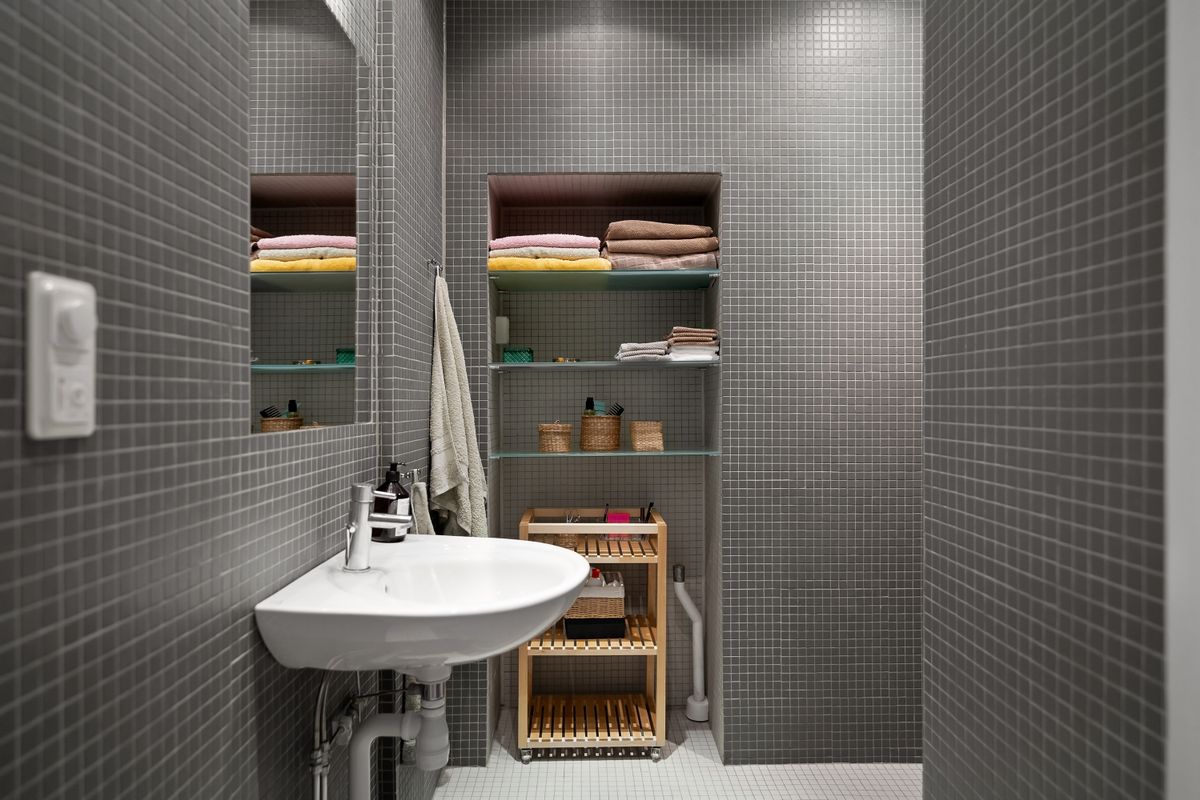
Use height carefully
Over-toilet and high-wall storage can add capacity, but it should be securely installed and should not create a head-height obstacle.
Keep cleaning simple
A clear floor and fewer countertop objects make a small bathroom faster to wipe down. The storage system should reduce maintenance, not create more surfaces to clean.

Small Space Planner combines measured furniture footprints, circulation-first planning and practical renter constraints. Numerical product dimensions should always be checked against the exact manufacturer model, your lease and your building conditions.
Read our editorial and research policy →Turn the advice into a measured starting plan.
Enter your dimensions, bed choice and priorities in the free studio planner.