Studio room divider ideas that do not block light
A divider should solve a privacy or zoning problem without creating a new daylight problem. In one-room apartments, the window often serves several functions at once, so full-height solid barriers can make the back half of the room feel disconnected.
Use the lightest divider that solves the problem: curtains for flexible privacy, open shelves for storage, low cabinets for visual boundaries and slatted screens for partial separation.
Test the advice against your actual space
A divider should solve a privacy or zoning problem while preserving the window's ability to serve the whole room. The lightest effective boundary is usually the best starting point.
- The direct path between the main window and the darker part of the studio
- The height and opacity of the proposed divider
- The width needed to pass beside or around it
- Whether the divider adds storage or another useful function
Example only: a 72-inch-high solid screen can visually close a sleeping area but also block a large part of a single window's light path. A curtain that opens fully or a lower cabinet may solve the same privacy problem more flexibly.
Use the least permanent, least opaque divider that solves the actual problem.
Do not add a divider when furniture orientation, a rug and lighting already make the zones clear.
Curtains are the most flexible
A ceiling-track curtain can close the bed visually at night and disappear during the day. It adds softness and can be changed more easily than built-in partitions.
Renters should verify how the track is fixed and what the lease allows.
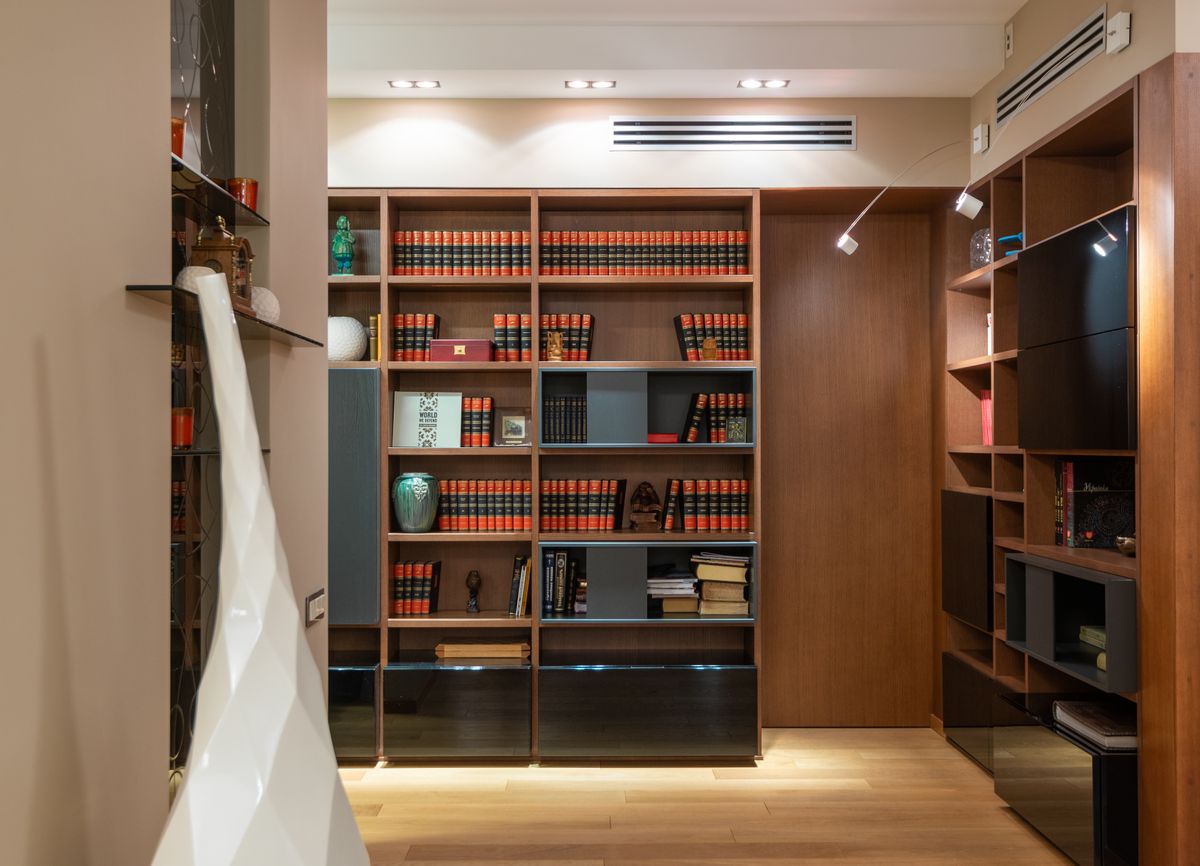
Open shelving works when it stays open
A shelf can separate bed and living areas while storing books or baskets. But filling every opening with opaque bins turns an open divider into a wall.
Keep some voids so light and sightlines pass through.

Low storage preserves the horizon
A cabinet around waist height can create a strong edge while leaving the upper room visually continuous. This often works well behind a sofa or at the end of a bed.
Slatted screens give partial privacy
Vertical slats interrupt direct views without fully closing the room. They can feel more architectural than curtains, but they are less flexible and usually require careful installation.

Sometimes the sofa is enough
Before buying a divider, rotate existing furniture. The back of a sofa, the edge of a rug and a floor lamp can establish a living zone with no extra footprint.
Small Space Planner combines measured furniture footprints, circulation-first planning and practical renter constraints. Numerical product dimensions should always be checked against the exact manufacturer model, your lease and your building conditions.
Read our editorial and research policy →Turn the advice into a measured starting plan.
Enter your dimensions, bed choice and priorities in the free studio planner.