Where to store a vacuum in a small apartment
A vacuum that fits behind a door may still be impossible to pull out without moving three things. In a compact apartment, the best location is the one where the entire cleaning kit can be retrieved, used and put away easily.
Measure the vacuum in its stored position and the extra space needed to retrieve it. Favor a closet edge or utility corner near cleaning supplies. For charging models, follow the exact manufacturer's docking and electrical instructions instead of hiding the dock in an unventilated or obstructed space.

Test the advice against your actual space
Vacuum storage is a retrieval problem as much as a footprint problem. The useful location is the one where the machine, attachments and charging setup can be reached and returned without moving unrelated furniture.
- Stored width, depth and height including the dock or hose
- The movement needed to roll, tilt or lift the vacuum out
- Where accessories can stay with the machine
- Cable, charging and mounting requirements for the exact model
Example only: a 14-inch floor head may fit inside a 16-inch niche, but the handle can still need a much wider angle to come out. Tape the stored footprint, then physically mimic the retrieval motion before treating the niche as usable storage.
Compare candidate locations by the whole retrieval sequence, not by static width alone.
Do not hide a charging dock where cables are pinched, airflow is obstructed or the manufacturer does not permit installation.
Measure two footprints, not one
Record the stored width, depth and height, including the handle, dock, hose or charger. Then simulate the movement required to lift, roll or tilt the vacuum out.
For example, a 14-inch-wide floor head may fit inside a 16-inch gap, leaving one inch on either side. That is only a static fit: the handle angle, wheels and retrieval direction may still make the gap impractical.
Choose a location by vacuum type
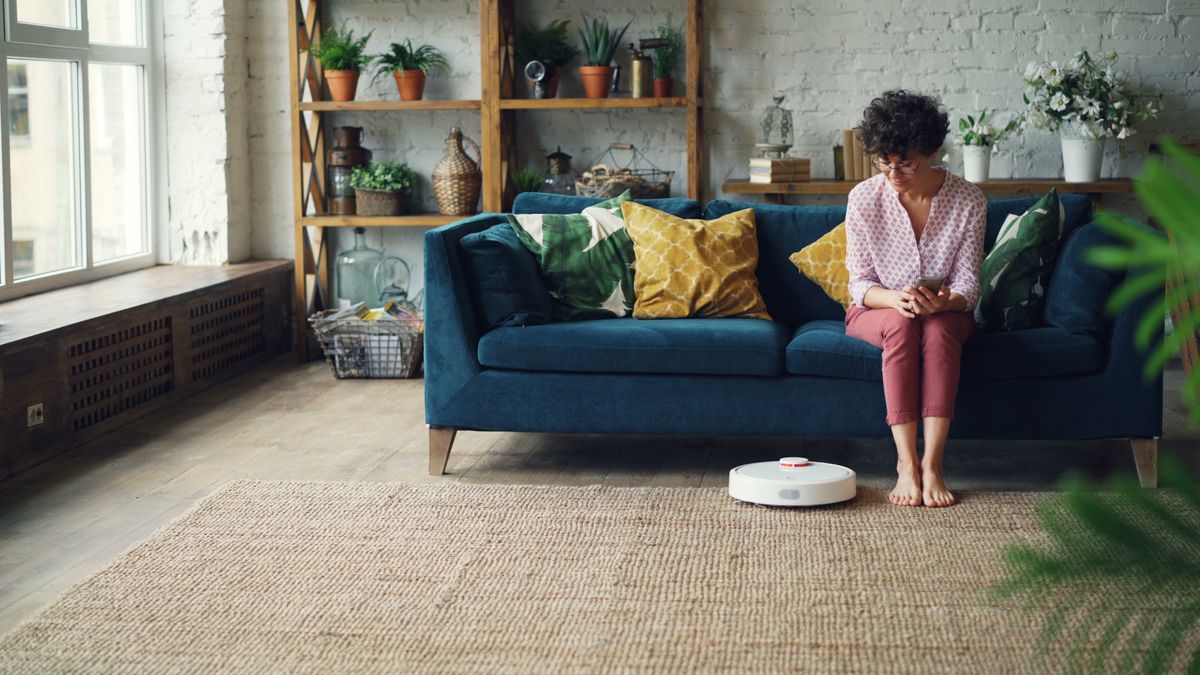
A cordless stick may fit vertically on a permitted dock or stand, with its attachments together. A canister needs space for the hose and a rolling exit route. A robot needs an unobstructed approach to its base and any model-specific side or front clearances.
- Stick: test height, dock access and whether the handle can lift clear.
- Canister: allow for the hose, floor head and turning radius.
- Robot: verify the base location against your exact model's manual, not a universal clearance rule.
Keep cleaning accessories in the same zone
Store the crevice tool, spare heads and washable accessories in a labeled basket beside the vacuum. An awkward accessory location often turns a quick clean into a search.
Do not store wet attachments against electrical charging contacts; clean and dry parts according to the manufacturer's instructions.
Renters should plan for reversibility
Before mounting a charging dock, check the lease, wall construction and supplied mounting instructions. A freestanding compatible stand or a shelf can be easier to take to the next apartment, but only if the product is stable and its charger can be used as directed.
Avoid pinching charging cables behind doors or under furniture.

Try the ten-second retrieval test
With the vacuum fully stored, time how many actions it takes to retrieve it and put it back. You do not need a target number: compare candidate locations using the same sequence. Choose the one with fewer obstacles that still meets the manual's requirements.
If no position works, reconsider whether a different vacuum form factor would fit the apartment better before buying extra organizers.
Before you finish
- Stored dimensions measured
- Retrieval movement tested
- Accessories have one home
- Charger and dock instructions checked
- Lease and mounting restrictions checked
- Main walking route stays clear
Small Space Planner combines measured furniture footprints, circulation-first planning and practical renter constraints. Numerical product dimensions should always be checked against the exact manufacturer model, your lease and your building conditions.
Read our editorial and research policy →Sources & further reading
For safety, building-system or health-related points, we prefer primary public-agency guidance.
Turn the advice into a measured starting plan.
Enter your dimensions, bed choice and priorities in the free studio planner.