Warm Minimalism in a Small Apartment: Add Texture Without Adding Clutter
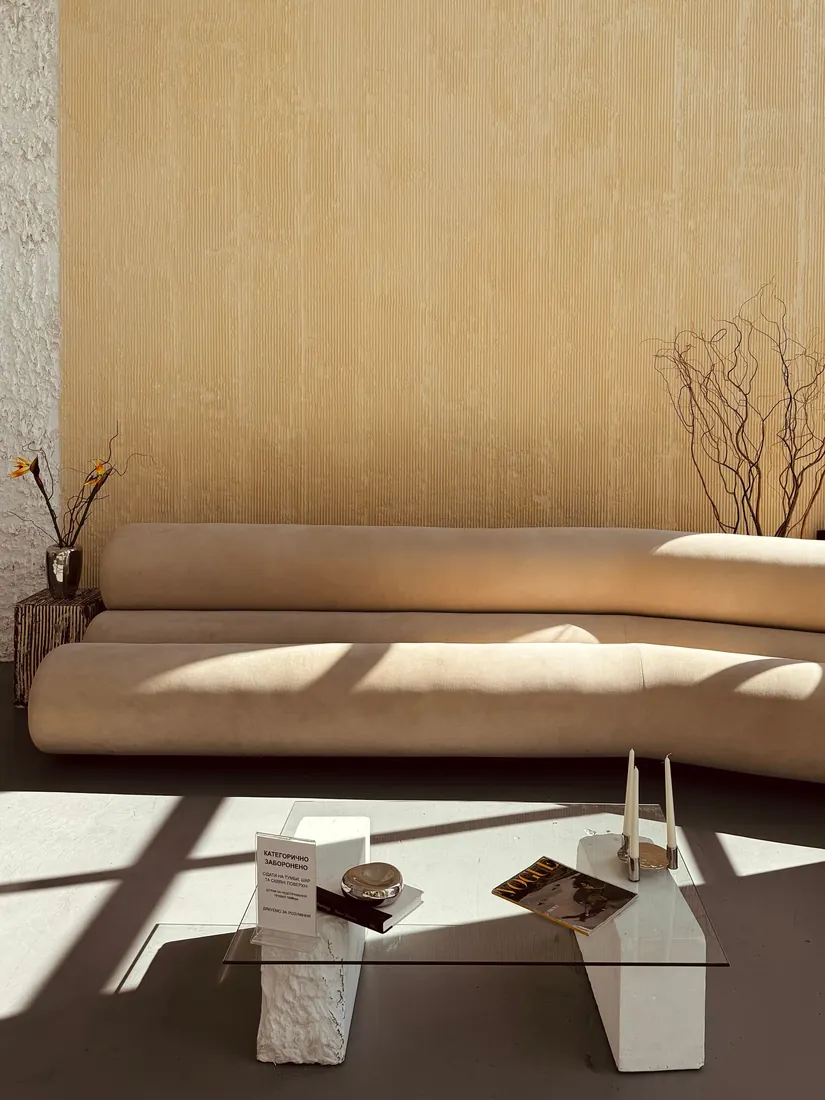
Warm woods, tactile textiles and earthier colors are prominent in October 2026 interiors coverage. In a studio apartment, the useful question is not how to copy a styled room: it is how to add warmth without reducing clear floor space, daylight or everyday access. This guide treats warm minimalism as a set of reversible, measured decisions rather than a shopping trend.
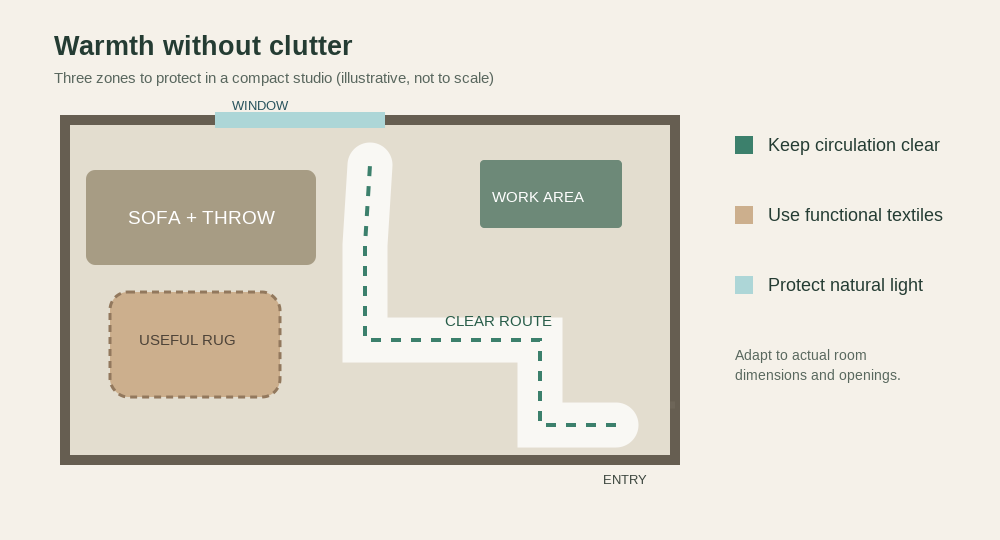
Keep the existing large furniture and circulation route. Choose one background color family, one wood or natural-material tone and one restrained accent; add texture through items you already use, such as a throw, curtains or a rug. Test each addition against walking space, cleaning and light before buying anything.
- Start with the layout, not a mood board
- Use a three-part palette you can repeat
- Spend your texture budget on objects with a job
- Compare curved furniture with its true footprint
- Build a lighting layer without filling the floor
- Try a no-purchase weekend reset
- Use a small buying scorecard only if something is missing
- What to skip in a genuinely small room
Start with the layout, not a mood board
A warm room can still be difficult to live in. Before choosing fabrics or paint, walk the route from the entrance to the kitchen, bathroom, bed and windows. Notice which corners need to stay open for a chair, drawer, door or laundry rack. These are the places where another basket, plant stand or floor lamp may create friction.
Photograph the room from the doorway and from the main window. Those two views reveal whether a new item will interrupt a sightline. If the room is already crowded, remove or relocate one object before introducing another. This is a practical editing rule, not a claim that a particular aesthetic makes rooms objectively larger.
- Identify the main walking route and door swings.
- Record the surfaces you actually use every day.
- Keep at least one view across the room visually open.
- Check lease rules before changing walls or fixtures.
Use a three-part palette you can repeat
Instead of collecting unrelated trending shades, work with the largest colors already present: the floor, sofa, cabinetry and bedding. Choose a background family that connects them, such as warm ivory, mushroom or muted clay. Add one repeated wood or natural-fiber tone, then use one accent in small quantities.
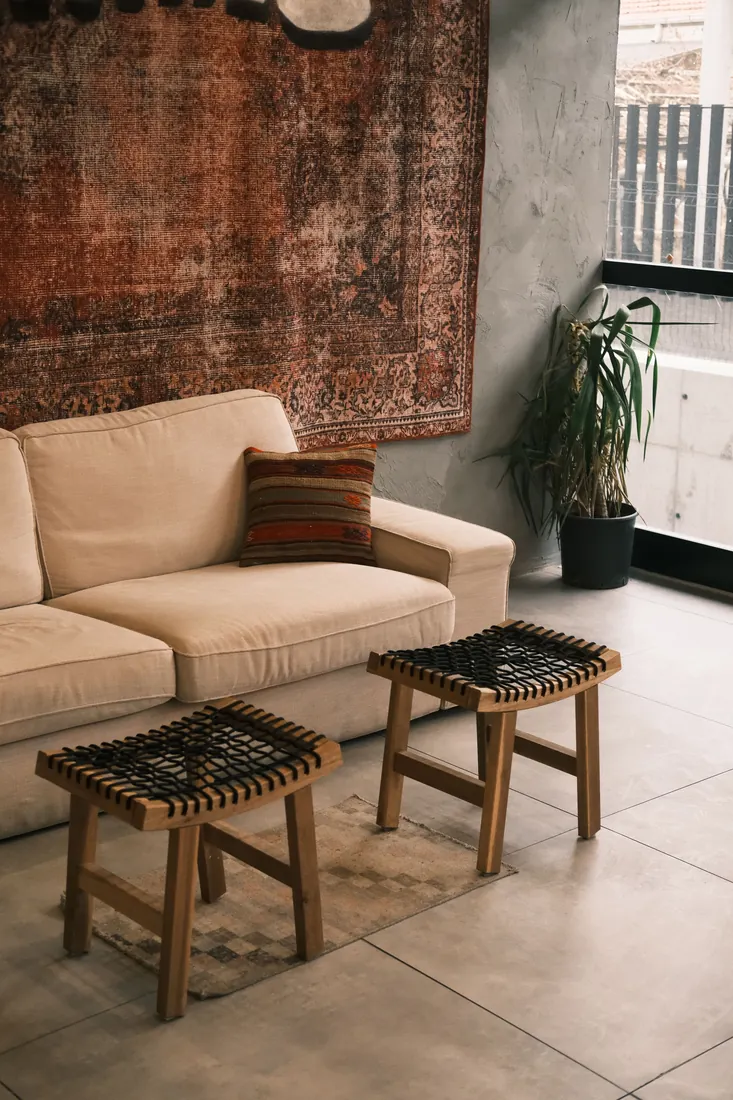
For example, a renter with a grey sofa and pale oak floor might use oatmeal curtains and a textured off-white throw, repeat the oak tone in one tray, and add rust in two removable cushion covers. There is no need to repaint the walls or replace the sofa. The palette is a coordination tool, not a fixed color formula.
- Background: walls, bedding or curtains that occupy the largest visual area.
- Material: a repeated wood, linen or woven texture.
- Accent: one muted color repeated in two or three movable items.
Spend your texture budget on objects with a job
A blanket on the sofa can add warmth while being used daily. A rug may soften footsteps and identify a living zone, but only if it does not bunch at a doorway or become a trip hazard. Curtains can add privacy and softness; check that their fabric and placement suit the window, heater and local fire-safety requirements.
Before buying a decorative basket, ask what it will hold and where it will live when full. A basket that collects miscellaneous objects on the floor is not a storage system. A woven bin inside an existing shelf may be more useful than an extra freestanding piece.
- One washable throw instead of multiple decorative blankets.
- A rug sized to the furniture group, not a rug that blocks doors.
- A single useful basket inside existing storage.
- Curtains that provide privacy or light control, not merely another layer.
Compare curved furniture with its true footprint
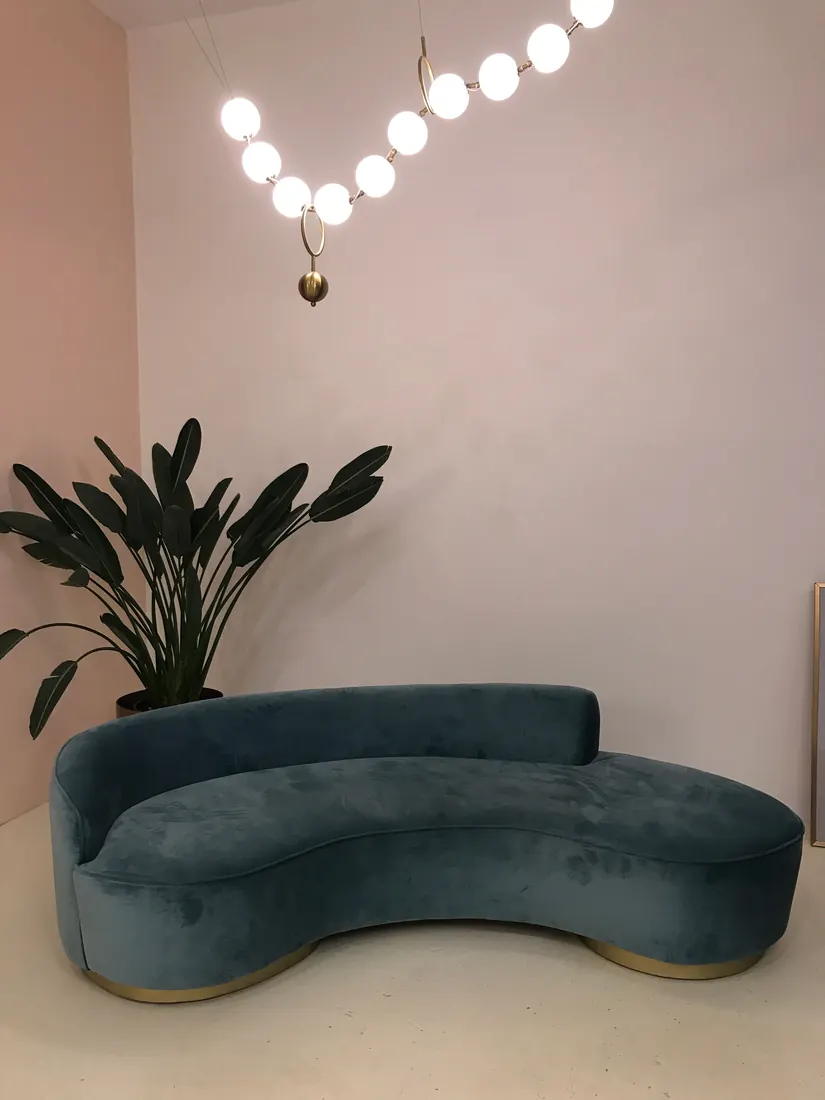
Rounded sofas and curved side tables are fashionable, but a rounded outline is not automatically compact. Measure the maximum width and depth of the whole piece, including the furthest point of a curved arm or tabletop. Then mark that envelope with painter’s tape.
An oval table can improve movement at one tight corner while consuming more space elsewhere. A straight-edged table might fit better against a wall. The right shape is the one that works with the route and the tasks you perform, not the one that looks softer in a photograph.
- Check overall dimensions rather than seat dimensions.
- Tape the outline and test chair pull-back.
- Verify delivery access before buying a statement piece.
- Avoid replacing functioning furniture solely to follow a seasonal look.
Build a lighting layer without filling the floor
Warm light can change the mood more than another object. Start by identifying what your existing overhead light does poorly: perhaps the desk is shadowed, or the sofa needs a softer evening light. Move a lamp you already own before buying one.
If you need an additional lamp, choose its placement by function and safe electrical access. A compact table lamp may work on a stable sideboard; a clamp lamp can free a tabletop if the clamp and surface are compatible. Follow manufacturer instructions, avoid overloaded sockets and do not run cables across walking routes. Color temperature preferences vary, so test the light in the room at the time you actually use it.
Try a no-purchase weekend reset
Day one: clear the main route, remove objects from the floor and gather textiles by color. Day two: swap a throw between sofa and bed, move one lamp, group small items on an existing tray, and take a photograph from the same viewpoint as before.
Evaluate the room on four practical criteria: can you move without detours, use the furniture, clean the floor and find everyday items? If a change fails one criterion, reverse it. This gives you an inexpensive experiment before you commit to paint, curtains or a new piece of furniture.
- Before photo from the entrance and main window.
- Move rather than buy at least one lamp or textile.
- Keep the floor and window access clear.
- Repeat the same photos and note what improved.
Use a small buying scorecard only if something is missing
Give a proposed purchase one point for each yes: it solves a named problem, fits the measured footprint, replaces or consolidates something, works with the existing palette and can be cleaned or moved easily. Five points does not guarantee a good purchase; the scorecard is a prompt to explain why an item belongs in the home.
If the purchase fails a safety, access or lease requirement, reject it regardless of its score. If it earns fewer than three points, wait a week and try a free rearrangement first. The point values are an original editorial decision aid, not the result of a consumer study.
- Useful function?
- Measured fit?
- Replaces or consolidates?
- Works with what you own?
- Easy to clean, maintain and move?
What to skip in a genuinely small room
Avoid buying a cluster of floor-standing decor pieces just because they look cohesive in a large photographed interior. Skip delicate textiles that require upkeep you cannot realistically provide, and avoid putting tall objects in front of the only window.
If the apartment already has a strong wood tone, a comfortable sofa and a working light, the most effective warm-minimalist change may be nothing more than decluttering the visible surfaces and keeping one useful soft textile. A practical small home should not have to look like a seasonal catalogue.
Before you finish
- Main walking route stays clear
- Background, material and accent chosen from existing colors
- Each new textile has a practical job
- Rug, table and lamp footprints tested
- Electrical and heater clearance instructions checked
- One no-purchase reset completed
- No unneeded storage or decor purchased
Small Space Planner combines measured furniture footprints, circulation-first planning and practical renter constraints. Numerical product dimensions should always be checked against the exact manufacturer model, your lease and your building conditions.
Read our editorial and research policy →Sources & further reading
For safety, building-system or health-related points, we prefer primary public-agency guidance.
Turn the advice into a measured starting plan.
Enter your dimensions, bed choice and priorities in the free studio planner.